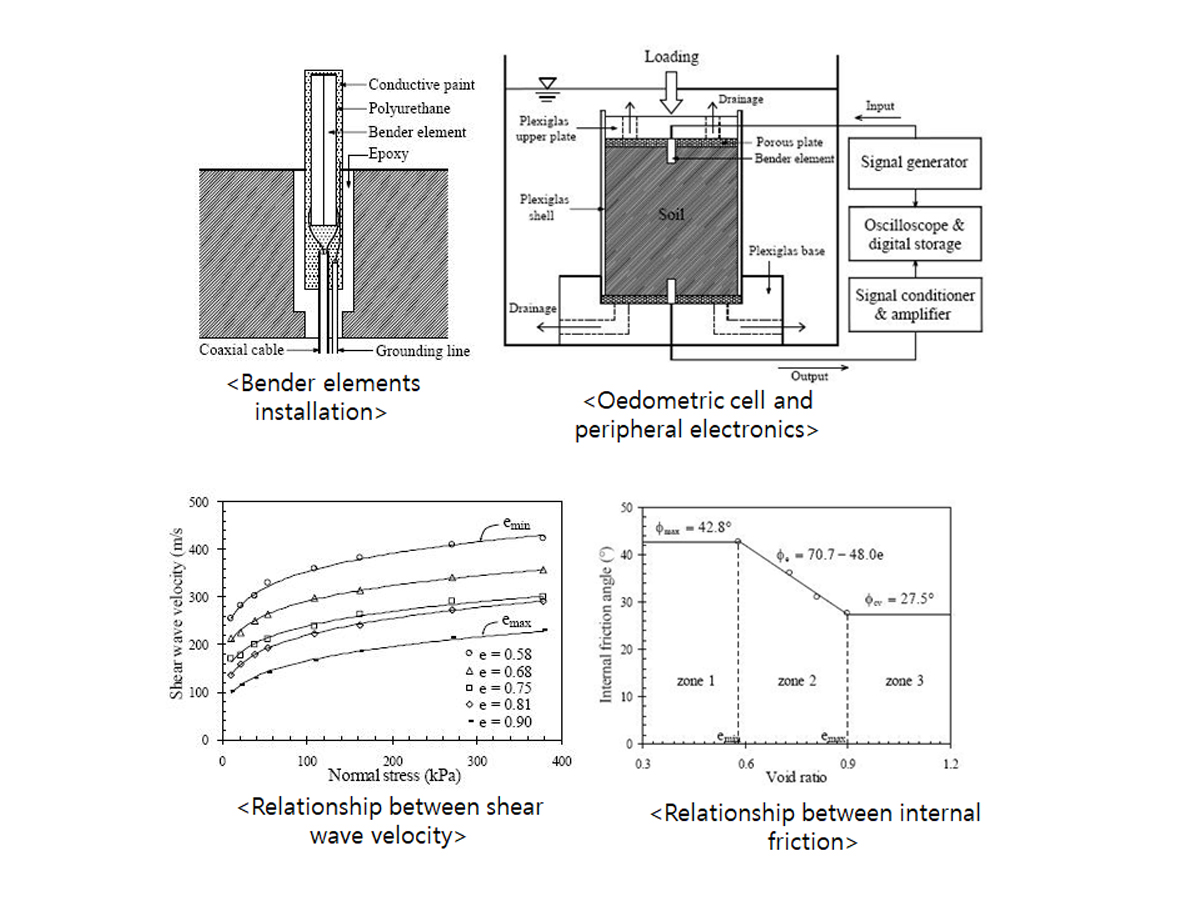 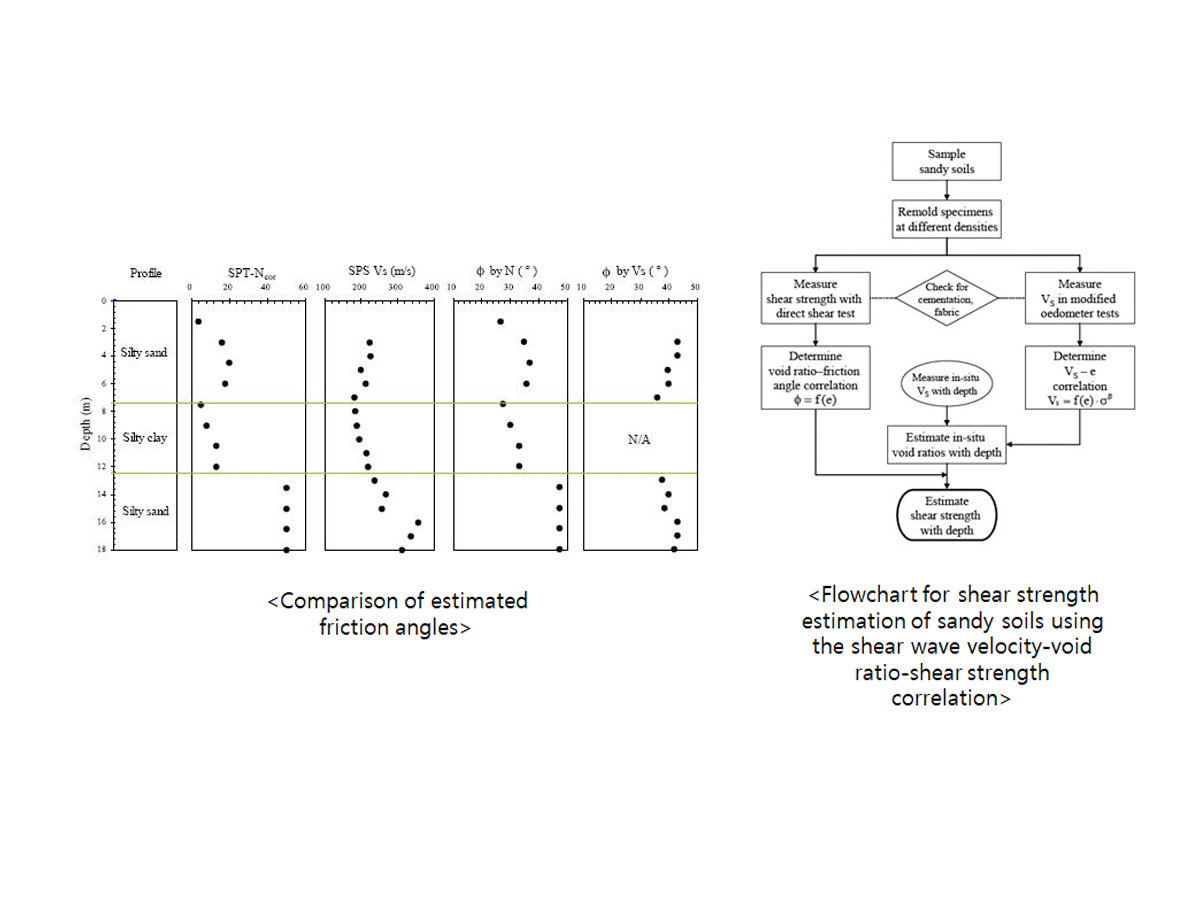
Typically, shear strength is associated with large strain phenomena, while shear wave propagation is associated with small strain phenomena. Yet, the effective stress and void ratio, both key determinants of sandy soil shear strength, are also primary factors affecting shear wave velocity. This study presents a shear wave velocity-void ratio-shear strength correlation through experimentaion. Natural sands taken from various reclaimed or recently deposited sandy fields were used for reconstituting specimens at different void ratios in an oedometer cell. Shear wave velocities were measured while changing the state of the stress in the cell for each specimen prepared at a specific void ratio. The relationship between shear wave velocity and vertical effective stress was found at extreme values of void ratios (e min and e max). Direct shear tests were also performed on specimens with various void ratios. The experimental results show that the internal friction angle of each sand type increased with decreasing void ratio, rendering a unique relationship between the friction angle and void ratio. Finally, a procedure was suggested to evaluate the in-situ shear strengths of a sandy soil based on in-situ shear wave velocities. The results show that the suggested method effectively estimates in-situ shear strength. |